
"March forth!"
Five misc. items + brave! (you'll see what I mean)

“March forth on March 4 to speak well, write well, and help others do the same!” ~ Martha Brockenbrough, founder of National Grammar Day
March 4th is National Grammar Day and I am once again taking the opportunity to honor the day. Before I proceed, here are links to my previous posts offering thirty different pointers. Perhaps you’ll find a correction to something you do in there, if not new information.
To honor Grammar Day this year, instead of offering more pointers, I am “marching forth” by sharing five miscellaneous items I recently looked up or noticed, and thought were interesting. Any of these new to you?
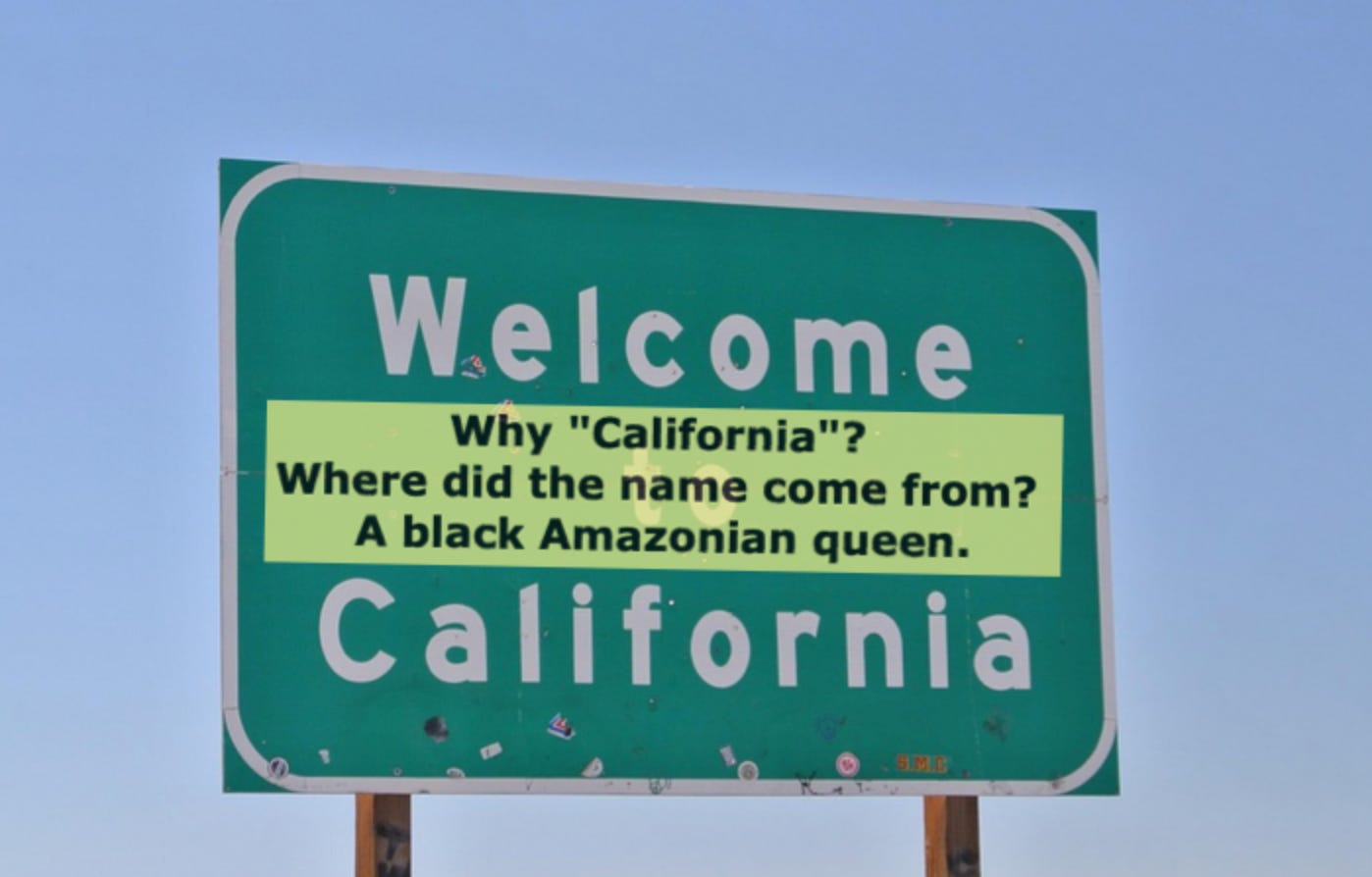
1. Do you know why the state was named “California”? Where did the name come from? When Spanish explorers first arrived in what is now Baja California in the 1500s, they thought it was an island, so they named it after a fictional island in the 1510 Spanish romance novel, Las Sergas de Esplandián (The Adventures of Esplandián) by Garci Rodríguez de Montalvo. This mythical island of California was ruled by Amazonian black women. The queen of the island was named Califia. Here’s an entertaining elaboration:
“. . . the name "California" traces its origin to a centuries old story about an island, full of gold, run by black women who fed men to their pet griffins. Like other Amazonian legends, the island of California was a place filled with strong, self-sufficient women who solicited male attention completely on their own terms.” –From PBS SoCal
Who knew?? Not I.
Now, how did Montalvo himself come up with the name? As noted in the article above, it likely came from the Arab word “Khalifa” which means “head of state,” “deputy,” or “successor”. Parts of Spain were ruled by the Moors until 1492. The Moors were Muslim, so Arabic words were familiar to Spaniards at that time.
2. Do you know why someone assisting in childbirth is called a “midwife”? I wondered about the “-wife” part, so I looked it up. The Oxford English Dictionary defines midwife as “a person (typically a woman) trained to assist women in childbirth”. Here’s the derivation: “mid-” means “with”; and “wife”, in its archaic definition, means “mother”. Thus, “with mother”.
3. Do you know where the idiom “almost bought the farm” comes from? I hadn’t heard this idiom until my husband said he almost bought the farm during a bike ride. I asked what he meant. He said he’d barely avoided a horrible accident when a speeding truck swerved into his lane. Okaaay. A lovely piece of news. But almost buying the farm? Curious about the phrase, I looked it up.
“[the phrase] refers to someone deceased in a military accident or operation. Phrase predates World War II, but came into common use at that time due to the large numbers of training casualties due inexperienced pilots/crewmembers trained in aircraft that are much less reliable than today. Common accidents in rural areas would result in aircraft crashing into barns, fields, or rural property, resulting in damages. The US Government would compensate the affected property owners with checks to pay for damages, or in some cases condemn land contaminated with undetonated/unlocated munitions/weapons, in effect "buying the farm".” - Urban Dictionary
4. What about the idiom “Bob’s your uncle”? Do you know where it comes from? This is a U.K. idiom that’s also common in the U.S.. It means, “there you have it”. Or, easy-peasy, done. Its origin? Nepotism, basically.
“The origin of the phrase goes back to 1887, when British Prime Minister Robert Gascoyne-Cecil appointed his nephew, Arthur Balfour, as Minister for Ireland. At the time, many saw this appointment as an example of favouritism, since Balfour wasn’t especially experienced. The joke was that it’s easy to succeed when Bob’s your uncle (literally)! Arthur referred to Robert as “Uncle Bob,” and the phrase stuck.” -EC English Language Center
5. Do you know that Spanish books generally do not use quotation marks for dialogue? They use different punctuation marks. I notice this because I read books in both Spanish and English and the difference is consistent. Naturally, there are stylistic distinctions overall, as when an author opts not to use any markers at all, but by and large, you’ll find that English text uses the quotation marks “ and ” on either side of dialogue, while Spanish text marks the start of dialogue with an em-dash, — , called a raya in Spanish. Some Spanish text (printed in Spain) uses the angle marks « and » on either side of dialogue.
Em-dashes and angle marks are not found on your keyboard. You have to enter special commands to create them. You likely don’t use angle marks, but since the em-dash is fairly common, I’ll indicate how to type it on different devices: on Windows click and hold ALT and type 0151; in Microsoft Word, click the hyphen key (-) twice in a row; and on a Mac, click Option+Shift+the hyphen key (-).
For the difference between hyphens, en-dashes, and em-dashes, check out “Ten (more) pointers”.
And those are my five miscellaneous items, but now, I’m adding one more, because it’s something I discovered while writing this post:
6. Did you know that the Italian word bravo is used when praising a man, but that the word conjugates depending on who or how many people you’re addressing? The feminine brava is used when praising one woman; while bravi is used for multiple men (or mixed genders); and brave, for multiple women.
I like that. Brave! The perfect segway . . .
March is Women’s History Month, so I am also taking this opportunity to champion all the women who contributed personal stories to my book, Dare to be Fabulous. Brave! 🤸♂️
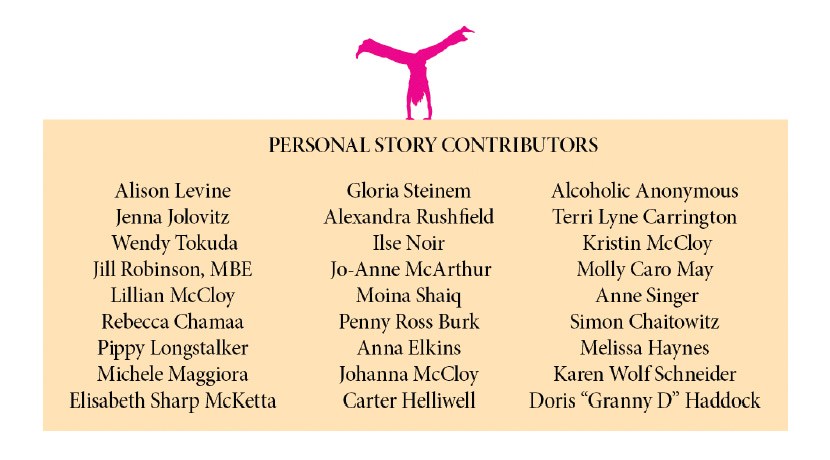
Dare to be Fabulous features twenty-seven personal stories of daring, joy, and empowerment. The stories come from a wide range of women, covering a wide range of experiences. It’s a funny, honest, touching, and inspiring collection. And each story is followed by a prompt. Here’s the full roster of contributors, as shown on the back cover of the book:
“This book holds together the power women find when they are honest and courageous. Some of these stories moved me to tears, others made me believe in humanity again, many I could identify with. This book brought me tremendous joy and insight, and brought me back to believe in the human spirit.” ~ JULIANNA MARGULIES, multiple award-winning actor and author of Sunshine Girl: An Unexpected Life
And of course, my mother’s CIA memoir, Six Car Lengths Behind an Elephant by Lillian McCloy, makes another great book selection for Women’s History Month. 😎
What do you say?
March forth! And brave!
Were any of the items I shared in this post new to you? Do you have some interesting word or grammar-related factoids you’d like to share? Please do!
Like? Comments? Please scroll down and chime in! Every like matters, and comments enjoyed. Thanks for reading. And thanks for your support. I appreciate you all. 💗
✳️ In addition to my own writing and editing work, I help individuals with projects of their own. I’ve consulted on book ideas, manuscripts, essays, website content, and creative productions. 📖🖊️ 📺 🤩 My freelance services include coaching/advising, developmental editing, research, and copyediting. If you’re a LinkedIn member, you can also find my profile there. I welcome inquiries, so please reach out if you’d like more information.
✳️ If you’re reading this online (or link to the In This Life website), you’ll see that I’m testing a new background color for the site. I like the warm and earthy tone, but it also dims the print a bit. Do you like the color? Or do you find it makes the print too light for easy reading? I welcome your feedback.
I love this chick and I love this post!
I also learned quite a bit, also have an Uncle Bob, and have been concerned about buying the farm while cycling! And methinks we’d engage in less war if our leaders were women, Amazonian or not! Just saying …